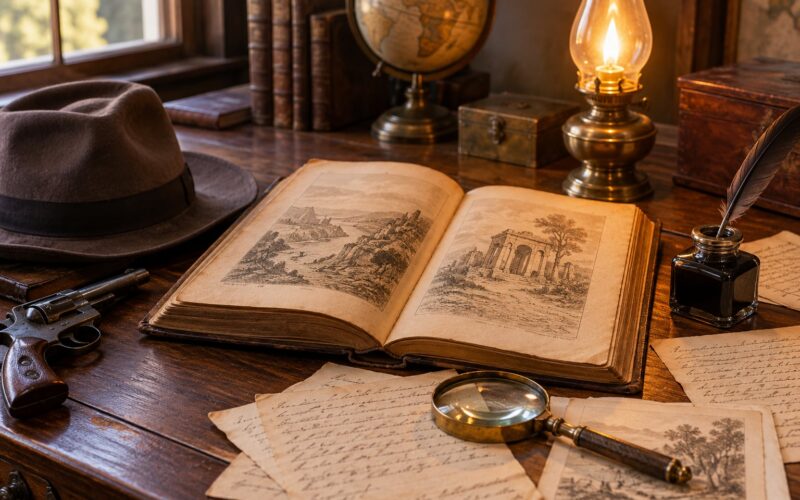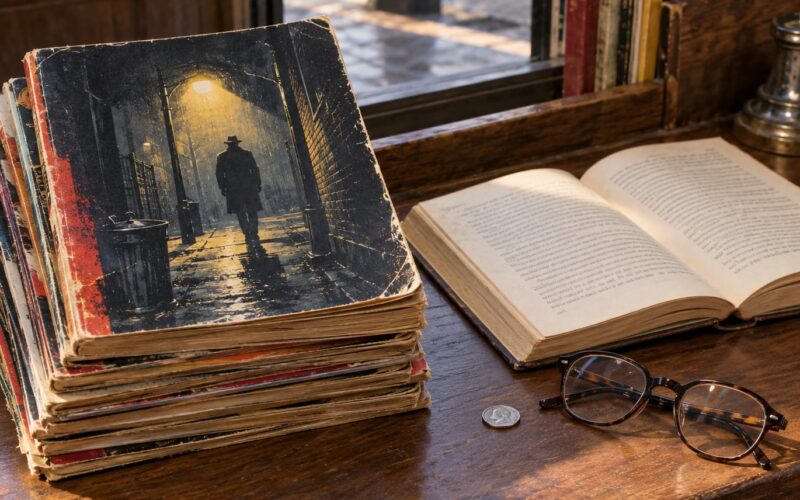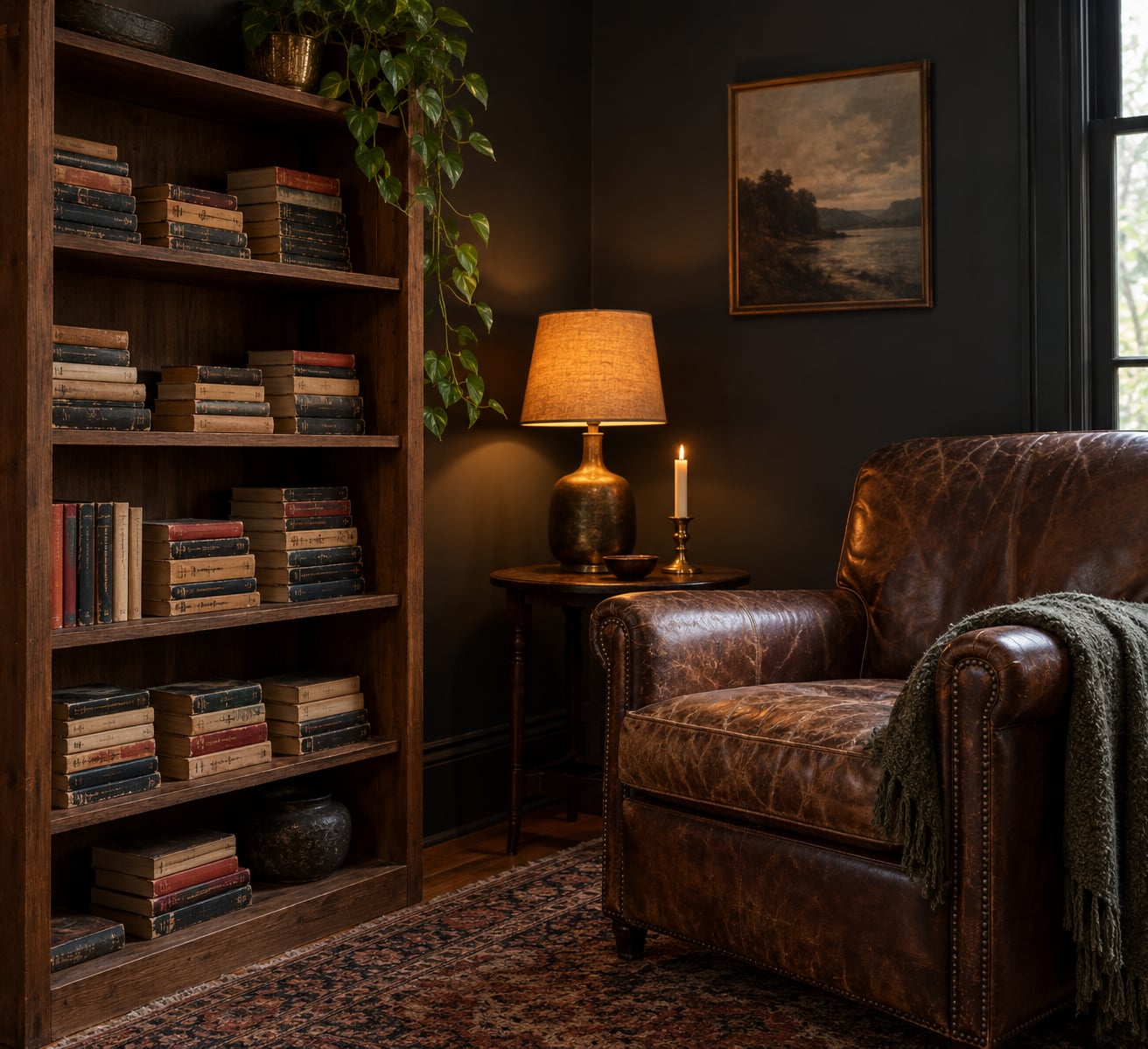
A noir home library is not a room with expensive furniture in it. It is a small, book-first corner built from four cheap decisions: one dark accent wall, one warm lamp, one comfortable seat, and a shelf of crime fiction you actually finish reading. Learning how to build a noir home library on a budget comes down to spending deliberately on paperbacks and used copies while skipping the decorative furniture almost entirely.
Most people take about two hours for the physical setup and six months to fill the first shelf properly. That slow half is the point. Rushed, you end up with forty books you never touch; slow, you get twenty you read twice.
Table of Contents
- What You Need
- Step-by-Step
- Set a noir collection budget by percentage, not by lump sum
- Start with the essential noir and crime classics
- Use libraries and used-book sellers to test authors before you buy
- Choose affordable editions without sacrificing readability
- Add lesser-known writers so the shelf stays interesting
- Organize the collection for repeated reading
- Expand gradually instead of buying everything at once
- Common Mistakes
- Frequently Asked Questions
- How many books should a beginner noir home library contain?
- What is the cheapest way to buy noir books?
- Should I collect hardcover, paperback, or ebook editions?
- What is the best reading order for classic noir and crime fiction?
- Can a public library replace buying a noir home library?
- How do I find obscure noir authors without spending much?
What You Need
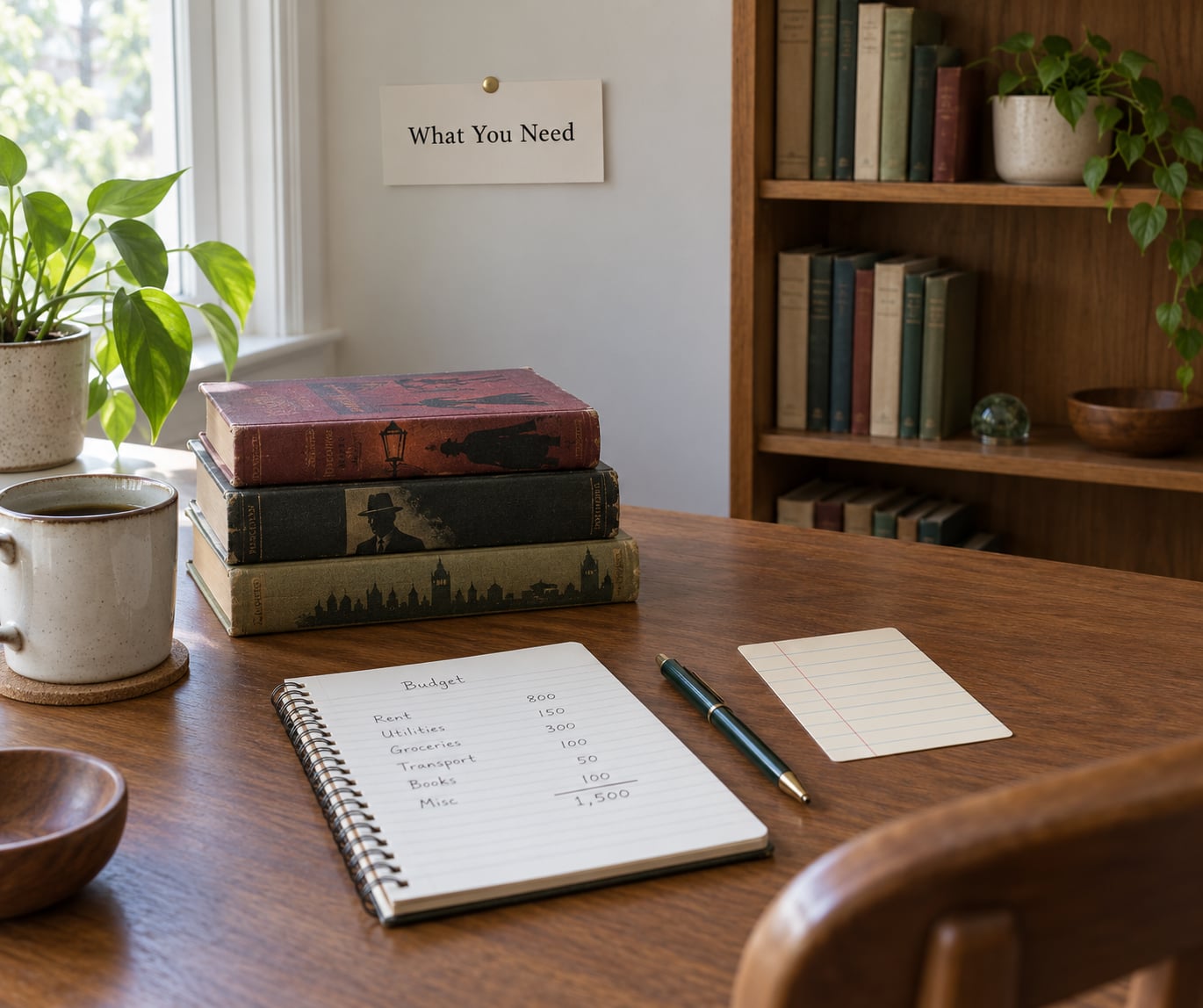
Nothing here requires a tool or a renovation. Before you buy anything, get four things in place.
A starter collection definition. Decide what “done” means for the first shelf. For most people it is twenty to thirty titles: the noir and crime books you would reread, plus enough lesser-known writers that the shelf does not read like a syllabus. Write the number down. It turns an open-ended hobby into a finishable project.
A spending range. Pick a monthly figure you would not notice losing. Thirty dollars a month buys roughly two or three used paperbacks and still leaves room for a coffee. Ten dollars a month builds a shelf slowly over a year. Whatever number you pick, treat it as a ceiling rather than a target.
A wish list. One running list, split into two columns: must-have and want-later. The second column is the one that keeps you from impulse-buying at the rack in front of the register. Almost nothing moves from column two to column one without sitting there for a month.
A tracking system. A spreadsheet works. So does a notebook with three columns: title, author, and a note on whether you finished it. The third column is the useful one, because it is how you stop buying a fourth detective you will not read.
Step-by-Step
Set a noir collection budget by percentage, not by lump sum
Divide whatever you set aside into four parts: fifty percent for the classics you will buy new or in good used copies, twenty percent for new discoveries each month, ten percent for shipping and convenience fees, and twenty percent held back for the book you did not know you wanted.
At thirty dollars a month that works out to roughly fifteen dollars of classics, six dollars of discovery, three dollars of shipping, and six dollars buffer. A friend of mine runs the same split on a smaller number and just stops the moment the buffer empties, which is a perfectly good system.
Keep the buffer for a reason: the best-value book in this hobby is almost never the one you planned for. It shows up in a sale cart or on a shelf you were already browsing.
Start with the essential noir and crime classics
The core of any starter shelf is small, and every title on it earns its place for a different reason. If you read nothing else in the genre, read these.
- The Maltese Falcon by Dashiell Hammett. The cleanest hardboiled spine in American crime fiction, and the detective everyone else is arguing with.
- The Big Sleep by Raymond Chandler. Chandler’s prose is the reason the phrase “noir writing” even makes sense to most readers.
- The Postman Always Rings Twice by James M. Cain. Shorter and blunter than Chandler, and closer to the mechanics of a real criminal enterprise.
- Double Indemnity by James M. Cain. A novella, so it costs almost nothing in any edition and finishes in one sitting.
- The Glass Key by Dashiell Hammett. Denser and colder than the rest, and the one people miss if they stop at three titles.
- The Long Goodbye by Raymond Chandler. A long novel, but the most approachable door into his work for a new reader.
Writers with a similar sensibility and a much cheaper backlist: Cornell Woolrich, whose Futures and I Married a Foul Play are deep cuts, and Patricia Highsmith, whose The Talented Mr Ripley is the coldest book on most beginners’ wish lists. Add one or two translated crime novels once the shelf has shape, because that habit is what keeps a collection from staying narrow.
Use libraries and used-book sellers to test authors before you buy
Borrow first, buy second. This single rule does more for a budget than any discount, and library sale tables are why many shelves get built almost entirely on change.
Search the catalog by author, place a hold, and read. If you finish the book and want to own it, buy it then in the cheapest edition available. If you abandon it at page ninety, you just saved the cost of a book you never wanted.
On the buying side, library sale tables are the cheapest legitimate source most readers have access to, and bags of books sold by the bag are usually the deepest discount available anywhere. Used bookshops with a bargain bin are worth the trip for one author even when the store itself is mediocre.
Secondhand marketplaces work well when you know the exact edition you want and badly when you search loosely.
What to reject when browsing: books with loose or missing pages, water staining, a cracked spine on a paperback, or a price that has not moved with the market. A paperback with a readable spine and intact pages is worth more than a hardcover with none of those things.
Choose affordable editions without sacrificing readability
Format is where most beginners overspend or underspend in the wrong place. Four options cover almost everything.
- Mass-market paperback is the cheapest and most portable, with small type that gets tiring after fifty pages. Right for commuting, wrong for reading in a chair with a lamp.
- Trade paperback is the everyday answer. Bigger type, sturdier spine, usually a few dollars more, and it survives a shelf.
- Library hardcover looks the best and costs the most. Worth it for one or two books you know you will reread, never for a shelf fill.
- Ebook costs less than any physical copy and takes no space. Good for testing a long series, less good if part of your reason for the corner is the shelf itself.
Two things to check before you buy a used copy: the page count against the edition you expected, and whether any pages are creased or stapled from a previous owner’s note-taking. For older classics, an unabridged edition matters. Older paperbacks sometimes abridge, and a shortened Hammett is a different book.
Add lesser-known writers so the shelf stays interesting
A shelf of only the six most famous titles reads like a gift shop. What keeps a collection worth revisiting is breadth across traditions, and the inexpensive end of the spectrum is where most of it lives.
American noir: Chester Himes, whose If This Is the World collects early work and is largely out of print, so look for used copies. Also Raymond Chandler’s short stories in The Simple Art of Murder, which read differently from his novels.
British crime: the Golden Age detective writers went out of print constantly and come back in affordable modern editions. Margery Allingham and Ngaio Marsh are both reliable, and Josephine Tey’s short novels are short enough to buy on impulse without regret.
European crime: translated Nordic and French crime is widely available in inexpensive paperback. Read one book by an author outside your own language tradition every few months; it is the cheapest way to keep the collection from becoming an echo of itself.
Japanese crime: the detective fiction canon has been available in English for decades in modest paperbacks, and the older entries are priced like any other backlist title. Start with anything already translated rather than saving them for a special project.
Organize the collection for repeated reading
The best organizing system is the one you will still be using in month three, and that usually means the simplest one. Author surname alphabetically is the only scheme that works reliably over time, because it survives new purchases, lendable books and duplicates.
Within author, order by publication date so a trilogy stays readable in sequence. Use a shelf marker or a strip of paper at the end of each run so you can find the next author without pulling books out.
Pair the shelf with a note system. A cheap spiral notebook where you jot the author, a rating and one sentence after finishing is enough. Two years in, that notebook is more valuable than the shelf, because it tells you what to read next and what to buy used instead.
Expand gradually instead of buying everything at once
Sustainable growth beats a single large purchase every time. A few habits do most of the work.
Keep the wish list live and add to it whenever a title comes up in a review or a friend’s recommendation. Wait thirty days before promoting anything to the buy column. Add one book a month rather than five, so the shelf always has room and you always know what the newest book is.
Buy the backlist after the frontlist. Once you own an author’s first novel, the used copies of everything else they wrote get much cheaper. Book clubs and library recommendation lists are free curation, and used-book stores with a loyalty card or a standing order for the sale table are worth finding once.
Seasonal sales are worth planning for if you can be patient: buy the books you already want in advance, and skip the impulse buys the sale is designed to trigger.
Common Mistakes
Buying duplicate editions of the same book. Two copies of the same novel is one copy and a donation. Fix: before buying, check your tracking sheet by author and title.
Choosing the beautiful edition over the readable one. A fancy hardcover that sits unread on the shelf is worse than a plain paperback you finish in a week. Fix: pick readability first, and treat presentation as a bonus.
Prioritizing looks before you own anything. A shelf arranged around color and cover art before it has books on it collapses the moment you buy a book with an offbeat cover. Fix: fill to two-thirds full first, style afterwards.
Ignoring translations entirely. An English-only collection quietly narrows the shelf year after year. Fix: set a rule of one translated crime novel per season.
Buying in bulk on launch day. A stack of forty books read zero is the most common collector’s failure. Fix: cap monthly purchases at the budget, not at the size of the sale.
Over-organizing in week one. Color-coding, labeling and numbering feel productive and get abandoned by month two. Fix: one system, author surname, and let anything else go.
Skipping the reading part. A collection nobody reads is a display, not a library. Fix: set the goal in books finished rather than books owned, and keep the notebook honest.
Waiting for the perfect shelf. Ideal conditions are a reason to buy nothing. Fix: start with whatever space you have; a stack of six paperbacks on a chair is a legitimate beginning.
Frequently Asked Questions
How many books should a beginner noir home library contain?
Start with twenty to thirty titles. That is enough to read as a real shelf and small enough that you will finish most of them. A workable first group is six classics, eight books by writers you discover through borrowing, and the rest split between lesser-known American noir, British Golden Age crime and one translated crime novel. Resist planning past thirty until you have read what you already own.
What is the cheapest way to buy noir books?
Library sale tables are the cheapest legitimate route, and bags of books sold by the bag go deeper than any sale event. After that come used bookshops with a marked-down bin and secondhand marketplaces, which work best when you know the exact author and edition you want. Buying the paperback original rather than a later hardcover is usually the biggest single saving available.
Should I collect hardcover, paperback, or ebook editions?
Trade paperbacks are the best everyday choice: larger type, a spine that survives a shelf, and a modest price. Mass-market paperbacks cost less but tire the eyes in a chair. Hardcovers suit the one or two books you know you will reread. Ebooks take no space and cost less than any physical copy, which makes them useful for testing a long series before committing.
What is the best reading order for classic noir and crime fiction?
Read Hammett’s The Maltese Falcon first, then The Thin Man, then The Glass Key. Follow with Chandler’s The Big Sleep and his long novel The Long Goodbye, which is the most approachable entry point. Add Cain’s Postman Always Rings Twice and Double Indemnity, both short. That order moves from clean and popular to bleaker and stranger, so the difficulty climbs gradually.
Can a public library replace buying a noir home library?
For reading, entirely. For building a collection, mostly. Libraries with large crime and mystery sections let you sample dozens of authors before spending anything, and their sale tables turn discarded stock into the cheapest copies you will find. What you cannot get is ownership, so if the shelf itself is the goal, borrow for a year first and buy only the books you already know you want to keep.
How do I find obscure noir authors without spending much?
Start with the bibliography inside the authors you already like, then check library sale tables and used bookshops for out-of-print backlist writers such as Chester Himes or Cornell Woolrich, whose early books are widely reissued at paperback prices. Translated Nordic, French and Japanese crime sits in ordinary paperback ranges. Keep a running wish list and add one unfamiliar author each season rather than searching randomly.
Open your library catalog tonight, place holds on two authors you have not read, and write your twenty-book target on the first page of a notebook. The shelf builds itself from there, one book at a time, at a cost you already decided you could handle.