Readers annotate a novel to remember it. Writers annotate one to take it apart, and knowing how to annotate a novel as a writer means your markup is a record of technique, not just a record of what you liked. The method is simple: set one craft question before you open the book, mark with a fixed key of five to seven symbols or colours, write margin notes that name the technique rather than your reaction, and then go back through the marked pages after the last chapter to pull out what you can actually use.
Annotation, in craft terms: marking up a novel deliberately — highlighting, tabbing, and writing brief margin notes — with the goal of studying how the book works: its structure, pacing, dialogue, prose, and character construction, so the technique can be reused in your own work.
The payoff comes at the end, not during. A book you annotate with a purpose becomes a reference set you can mine for structure, lines, and voice, instead of a reread you hope will still reveal the trick next time. It takes roughly ten extra minutes a session once the system is set up. Beginners usually over-mark the first twenty pages, then abandon the system entirely.
There is no single right key. A five-finger reading system taught in classrooms is about comprehension, not craft, and a system with twelve categories will slow you down faster than it teaches you anything. Pick one craft question, one small key, and go.
Table of Contents
- What You Need
- Step-by-Step
- 1. Set a Purpose Before You Read
- 2. Mark Structural and Character Beats
- 3. Track Craft Techniques
- 4. Capture Questions and Research Leads
- 5. Turn Notes Into Writing Lessons
- 6. Review and Distill Your Notes
- Common Mistakes
- Frequently Asked Questions
- What are the 5 steps of annotation?
- What are some annotation mistakes to avoid?
- How can I annotate a book without ruining it?
- Should I annotate books with a pen or a pencil?
- What should a writer look for when reading fiction?
- Is annotating a novel useful for improving your own writing?
- Conclusion
What You Need
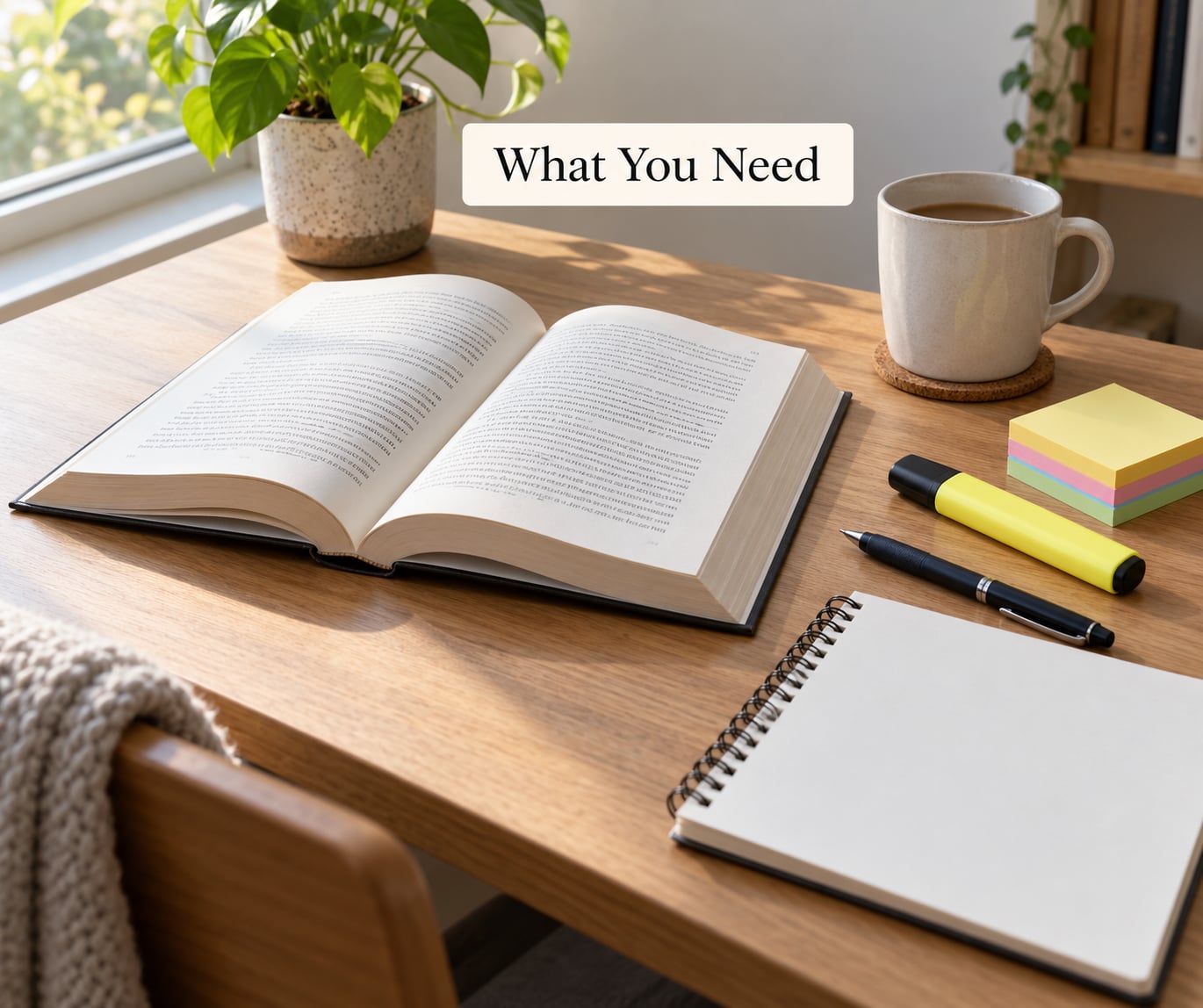
You need very little, and most of it you already own. What matters is that your materials let you mark fast and find things later, because an annotation you cannot retrieve is a mark that did not happen.
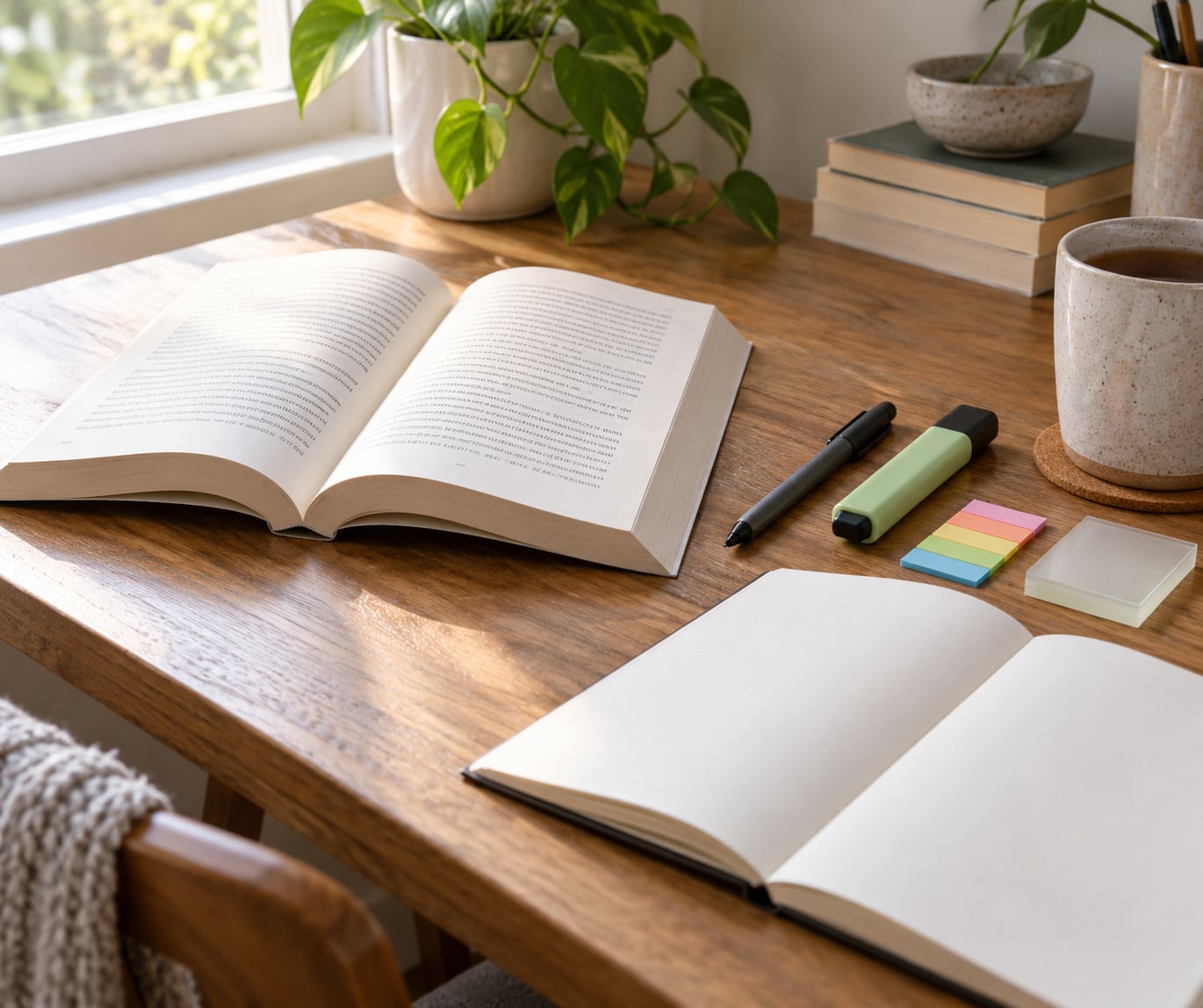
- A book you can write in. Your own copy, ideally a cheap copy for a book you expect to analyse heavily. Never start in a first edition or a collector copy.
- Two to three writing tools. A fine-tip pen or fineliner for your own books, a pencil for anything borrowed or destined for resale, and one highlighter with a chisel tip.
- A ruler. Underlines look intentional with a ruler and look like panic without one.
- Sticky tabs in one or two colours, for chapter-level or turning-point flags.
- Transparent sticky notes if the book is not yours, or if you want to annotate without touching the page at all.
- A notebook or a single digital file. Anything longer than one line of margin note goes here, keyed by chapter and page.
Digital counts too. Kindle highlights export to a file, and apps like Obsidian let you link one atomic note to another, which is close to how a Zettelkasten approach to novels works: one note per idea, each note holding your own words rather than a copied passage.
Write your key down on the inside cover or the first page before you start. Ten seconds of setup is what keeps page forty consistent with page four.
Step-by-Step
The process runs in six moves: a purpose, structural marks, sentence-level notes, questions, extracted lessons, and a final review. The order matters, because the later steps only work if the earlier ones were specific.
1. Set a Purpose Before You Read
Write down one craft question before you turn to page one. Not a general intention to pay attention, but a question with an answer you could recognise if you saw it: How does this author get tension into a scene that contains no physical danger? or Where does the point of view shift, and what does the shift buy?
Good purposes are narrow enough to be boring and broad enough to produce thirty notes. Weak purposes — learn something, enjoy it more, understand the plot — produce nothing you can use later. When you get stuck, a purpose is what pulls you out of highlighting every line that reads well, which is the most common failure mode on the page.
2. Mark Structural and Character Beats
Structural marks are the cheap ones and they do the most work. Mark the moment a chapter turns, the point where a reveal lands, the reversal, and every decision a main character makes that changes what they want or what they are willing to pay.
Use a tab for a turn and a bracket for a decision, then write three words in the margin: what the character wanted before, what they want after. After two hundred pages you can read the tabs alone and see the shape of the book without re-reading a word of it. That is how you learn structure that you can later apply to a scene of your own.
Watch the ratio of scene to summary as you go. Note where the author compresses weeks into a paragraph and where a single hour gets fifty pages. Pacing is not a feeling you can copy by instinct; it is a pattern you can only see if you mark it.
3. Track Craft Techniques
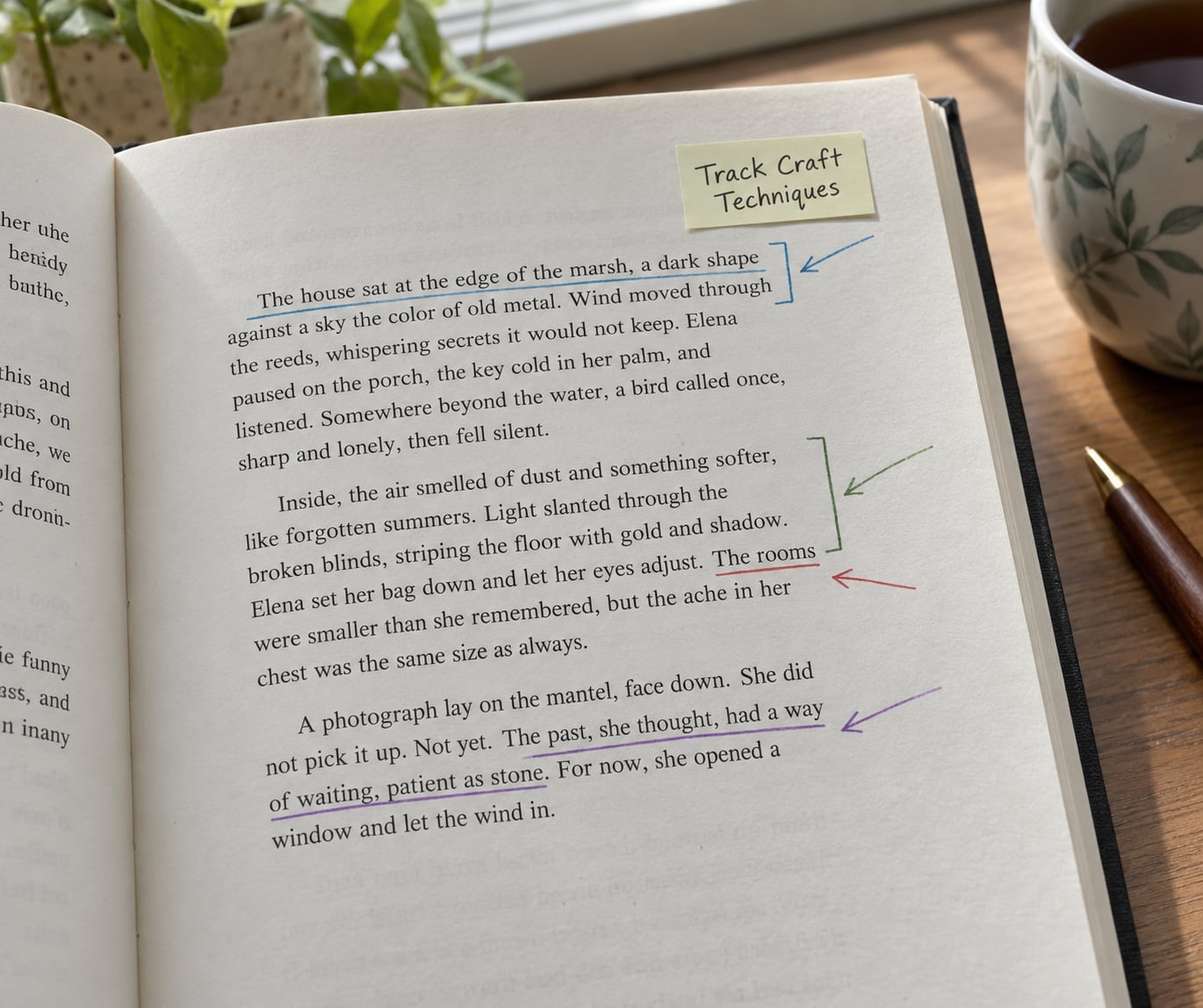
This is the sentence-level pass, and it is where most readers never go. Mark the line where dialogue carries subtext rather than information, the paragraph where show replaced tell, the sentence length shift that signals a change in pressure, the recurring image doing quiet symbolic work across chapters.
A margin note should name the technique and its effect, in under six words. Subtext: she says yes, means no. Long sentences, then one short. Pressure. Motif returns, 3rd time. Notes like good or ooh are reaction, and reaction is worthless eight months later. If you wrote a note that only makes sense to you while you are staring at the page, rewrite it now.
For voice and dialogue, mark the moment a character could only be that character. For prose and diction, mark any word you would not have chosen, then look at why the author did. A single surprising verb tells you more about voice than a paragraph of description does.
4. Capture Questions and Research Leads
Keep a second column in your notebook for questions, separate from your technique notes. This is where motives that do not add up, world rules that never get explained, details that feel lifted from a real profession, and a technique you are not sure you have understood all go.
Split the list in two once you finish: verified and speculation. Look up the verified column. Strike the speculation column that turned out to be wrong, and keep the ones that were right, because those are usually the places where the author traded in a small realism error to protect a plot turn.
Questions are also how you avoid analysis paralysis. Recording the doubt in four words moves you past it, and the doubt keeps working in the background while you read the next chapter.
5. Turn Notes Into Writing Lessons
Convert each note into a sentence you could teach: the technique, the effect, and the move. She withholds the villain’s motive until chapter nine, so the reader’s suspicion keeps shifting onto innocent characters — I could run my second act this way. That third clause is the part that makes the note useful, because it converts observation into an option for your own manuscript.
A note you could act on but did not choose to is still worth keeping. It tells you what kind of story you do not want to tell, which saves you the time of finding out later.
Collect the strongest lines into a swipe file — a running list of sentences whose rhythm or precision you want in your own ear. Copy them into a separate notebook, not into the margins, so you can find them without hunting through a marked-up novel.
6. Review and Distill Your Notes
Within a few days of finishing, reread only the marked pages. Look for patterns rather than individual notes: three or four uses of the same structural move, a habit of opening chapters with dialogue, a pattern in how the author exits a scene.
Distil that into three to five craft principles, written in your own words, plus one thing you will deliberately try in the current draft. Anything longer than that is a reading project rather than a writing tool, and it will never be opened again.
There is a second payoff further out. Pull an annotated book out of the cupboard a couple of years later and you see not just the book but the writer you were at the time — which predictions held, which notes you thought were brilliant and now cannot parse. Reading the margins as a record of your own taste is a strange thing to enjoy, and it is the one benefit of the habit nobody mentions.
Common Mistakes
The failures are predictable, and each has a plain correction. Almost all of them show up in the first hundred pages.
- Highlighting everything that reads well. You cannot mark forty pages and still read. Fix: mark the single most essential line per paragraph, and let the rest go.
- Building a key with twelve categories. You will spend longer choosing a colour than reading. Fix: cap it at five to seven, and add a category only when the same observation recurs three times.
- Letting colour meaning drift. By page one hundred your system is unsearchable. Fix: keep the key visible, on the inside cover or at the top of your notes, for the whole book.
- Writing reactions instead of observations. Beautiful tells you nothing. Fix: name the technique and the effect — one-sentence paragraph, then a long one. Comic timing.
- Annotating without a purpose. The notes end up scattered across dozens of pages with no theme. Fix: write the craft question down first, and abandon the book if you cannot find one worth pursuing.
- Never returning to the notes. This is the most expensive mistake, because the reading was the easy part. Fix: schedule the review before you start the next book, not after you have lost interest.
- Writing in a first edition or a book you plan to sell. Fix: pencil only, or transparent sticky notes, or a photo of the page on your phone.
- Letting tabs stop the book from closing. A book that will not shut is a book you resent. Fix: pull tabs back to the page edge, or use a small mark in the corner.
It is also fine not to annotate. Some books are not worth the work — a weak draft teaches you nothing, and a book you read purely for pleasure does not owe you a debrief. Annotation is a tool, not a test of seriousness, and reading without a pen is a legitimate way to read.
Frequently Asked Questions
What are the 5 steps of annotation?
The five core steps are: set one craft question before you begin; mark structural and character beats as you read; make short margin notes that name the technique rather than your reaction; record questions and research leads separately from technique notes; and revisit the marked pages after finishing to extract patterns. Tools and a written key come before step one, not after.
What are some annotation mistakes to avoid?
The recurring mistakes are over-highlighting, building a key with too many categories, letting colour meanings drift partway through a book, writing reactions like beautiful instead of observations about technique, annotating without a stated purpose, never returning to the notes, writing in a first edition, and letting tabs stop the book from closing.
How can I annotate a book without ruining it?
Use a pencil rather than a pen, or skip the page entirely and use transparent sticky notes or post-it notes with no adhesive residue. Reserve a separate cheap copy for heavy analysis. Never write in a first edition, a rare printing, or a book you plan to sell, and keep tabs trimmed to the page edge so the book still shuts flat.
Should I annotate books with a pen or a pencil?
Use a fine-tip pen or fineliner for books you own, because the notes stay legible and do not smudge, and use pencil for anything borrowed, collectible, or headed for resale. The practical detail is the tip: a 0.5 mm fineliner writes in a narrow margin without crowding the text and will not feather the paper.
What should a writer look for when reading fiction?
Writers look for craft rather than content: where chapters turn, how tension is built without physical danger, the ratio of scene to summary, point-of-view shifts, where dialogue carries subtext instead of information, how show replaces tell, the return of a motif, and the pacing change when an author compresses weeks into a paragraph. Each of these is a technique you can borrow.
Is annotating a novel useful for improving your own writing?
Yes, provided the notes record technique rather than reaction. Readers highlight to remember; writers highlight to study how a scene was built. The value shows up when you turn the marks into principles and try them in a draft, because that is the step most people skip and it is the step that makes the reading transfer.
Conclusion
Start with one craft question, one key of five to seven marks written down before page one, and a review of the marked pages within a few days of finishing. That is the whole system. If your notes cannot be read by you in six months, the key needs shrinking, not the book needs more marking.