
Learning how to write a heist plot comes down to three things: one precise objective, a crew small enough that every member matters, and a plan detailed enough that going wrong hurts. Get those right and the middle of the book practically writes itself. If you already have a draft and the planning scene is where you stalled, jump to step 5 — that is the bottleneck most writers hit.
Heists are unusual in that readers arrive already fluent in the conventions. They know what a crew assembly looks like, they know the plan will not survive contact, and they know somebody is going to double-cross the others. You are not teaching them anything new, which frees you to spend your energy on the one question that actually decides whether the sequence works: how much of the plan does the reader know before the clock starts?
Here is the blueprint I use, in the order I use it.
Table of Contents
- What You Need
- Step-by-Step: How to Write a Heist Plot
- 1. Choose One Clear Heist Objective
- 2. Build the Plan Around a Precise Goal
- 3. Assemble a Crew with Distinct Roles
- 4. Set the Stakes Before the Plan Begins
- 5. Create Obstacles That Test the Plan
- 6. Build Tension Through Choices Under Pressure
- 7. Execute the Heist in a Realistic Sequence
- 8. Add a Complication That Changes the Stakes
- 9. Deliver a Payoff and a Lasting Aftermath
- Common Mistakes
- Frequently Asked Questions
- What makes a heist plot believable?
- How many main characters should a heist story have?
- Should a heist story end with a twist?
- How do I keep the heist suspenseful without making it confusing?
- How much research does writing a heist story require?
- Can a heist plot work in a short story?
- Conclusion
What You Need
Before you write a single scene, you need five things pinned down on paper. Skipping this stage is why most stalled heists stall: the writer is trying to improvise a plan that was never designed.
- The premise in one sentence. Who wants what, from whom, and what happens if they fail. If you cannot say it without the word “and” in the middle, it is two stories.
- One heist objective. Not a theme, not a mood — a thing. A specific vault, a specific ledger, a specific person who needs extracting. Concrete targets generate specific plans.
- A protagonist with a private reason. The score is the crew’s motivation. Your lead needs one that has nothing to do with money, or the middle of the book has nothing to be about.
- The reader promise. Decide now whether the reader will get the full plan and watch it break, or whether they will get pieces and assemble the picture during the job. You cannot switch mid-sequence without losing both kinds of tension.
- A physical map. A floor plan, a route, a building with a service corridor and two exits. Draw it. Heists live and die on spatial legibility, and you cannot check logic you cannot see.
That is genuinely all you need. No research phase required, though a few hours on real cases later will sharpen the details.
Step-by-Step: How to Write a Heist Plot
1. Choose One Clear Heist Objective
A heist plot works when the crew wants one specific thing, and it stops working the moment you add a second. Two objectives means two clocks, two complications, and a climax that has to resolve both, and readers feel the strain even when they cannot name it.
Test the objective by asking three questions. Is it physically specific enough to plan around? Does stealing it cost somebody something? And does it change the crew’s position afterward? A museum’s crown jewels fail the third test — the crew ends exactly where it started, and the story has no future. My own rule is that the target should fix a problem for one crew member and create a new one for another.
The Italian Job works because the gold has a history. The heist in Reservoir Dogs works because the score is supposed to settle a debt. A target that changes the crew’s relationships is worth more than a target with a bigger number attached to it.
2. Build the Plan Around a Precise Goal
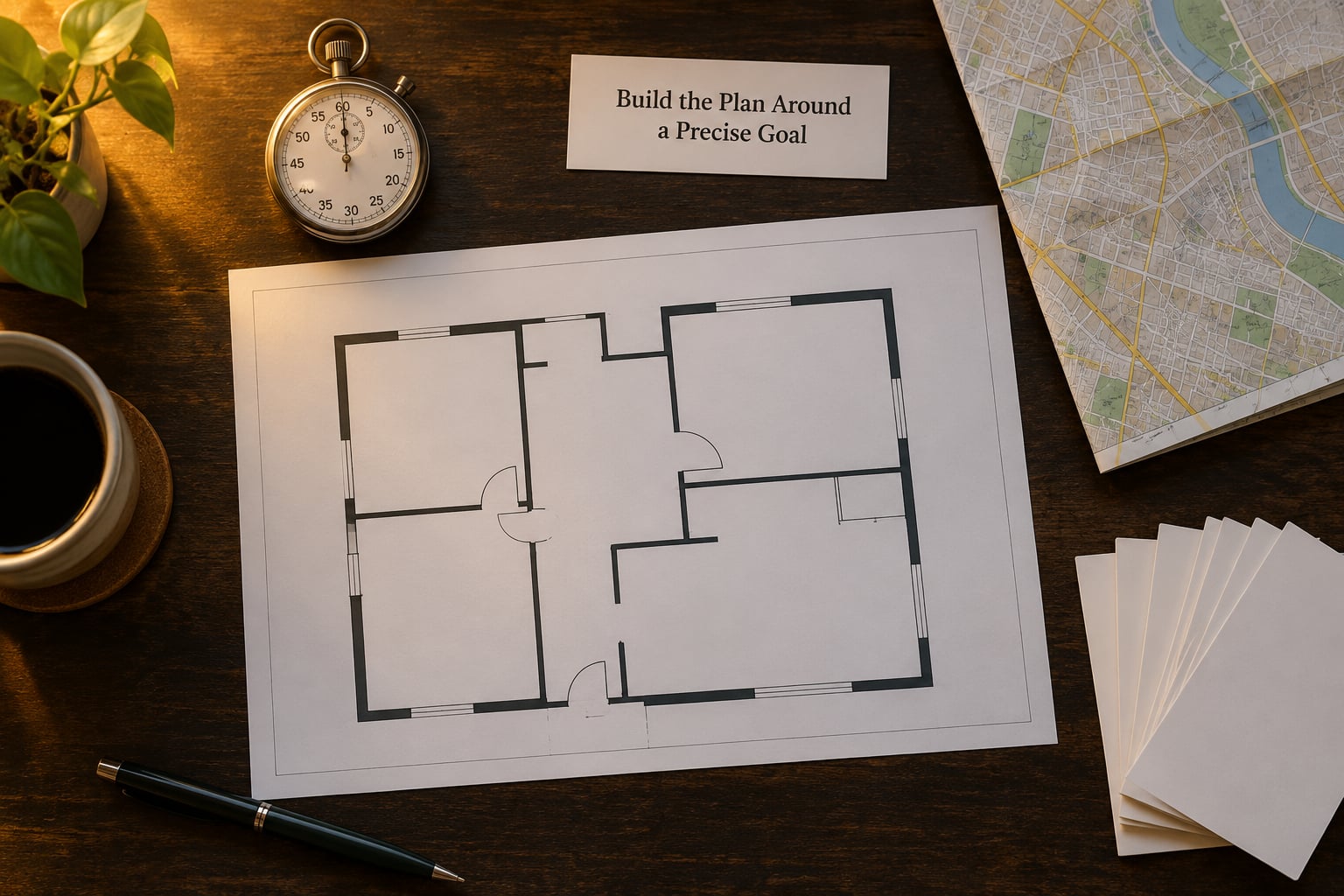
Once the objective is fixed, the plan is really a logistics problem. Entry point, route through the space, the target itself, the method of taking it, the transport, the exit. Write these as six answers, not as prose. Prose at this stage is where heist drafts go to stall, because writing a scene about a plan is much harder than writing a list that later becomes a scene.
The detail that matters most is the timing window. When does the security change shift? When does the CCTV loop reset? How long does the crew have between the alarm and the arrival of a response the plan accounts for? Every good heist has an answer to “how long do we have,” and readers feel the answer even when nobody says it aloud.
Also decide the plan’s weak point now, while you are still in the planning stage. Know which part of it is most likely to break. You will need that later, and choosing it in advance is the difference between a complication that feels inevitable and one that feels arbitrary.
3. Assemble a Crew with Distinct Roles
Every essential crew member needs a function in the plan, a pressure point, and a relationship to the protagonist. Miss any one of those three and the character becomes a passenger — and passengers are what make heist casts feel bloated. One recurring complaint on writing forums is a team of eight where three of them never touch the job.
Keep the number small enough that you can name every one of them in a single sentence. Six is plenty. Seven specialists plus a driver is a good working cast, and beyond that you are asking the reader to hold more names than the plot needs.
| Role | Function in the plan | Pressure point |
|---|---|---|
| Mastermind | Builds and holds the plan | Control — the plan only works if everyone follows it |
| Specialist (safecracker, hacker, grifter) | Solves the one problem nobody else can | Ego and overconfidence |
| Muscle | Handles the physical problem and the threat | Restraint — violence has consequences |
| Driver / transport | Sets pace and gets them out | Timing, and nerve under pressure |
| Fixer | Sourced the job, handles the client | Loose ends, and who the client really serves |
| Wildcard | Distracts, improvises, breaks the pattern | Unpredictability inside a controlled operation |
One role has to be un-delegable. Something on that plan can only be done by the protagonist, and that is where the personal cost lives when the plan fails. Heat does this well: the crew is competent, and the whole thing still runs through one man’s damage.
Assembly is also the cheapest place to introduce character. A recruitment scene is a person under pressure asking for something, which is drama before any vault is involved. That is why the assembly sequence is a named scene type in most heist craft, and why writers who skip it usually have to backfill motivation later in a hurry.
4. Set the Stakes Before the Plan Begins
Stakes are the reason the crew cannot simply walk away, and they have to be visible before the planning starts. What does each member lose if this goes wrong? A safehouse, a partner’s custody, a sibling’s debt, a person already inside a system they cannot leave.
The most useful distinction here is physical stakes versus relational stakes. Physical stakes are arrest, injury, death — reliable and easy to write. Relational stakes are the crew finding out what they are actually willing to do to each other, and those are the ones readers remember afterward.
Set the stake in a scene, not a paragraph of backstory. A character who says “I can’t go back to the shop after what happened” tells you more than three pages of history, and it costs you 400 words instead of 6,000.
5. Create Obstacles That Test the Plan
Obstacles come from four places: the world, the target, the crew, and the reader’s expectations. The most reliable one is the third category — a crew member whose own flaw undermines the plan. The expert who cannot stop showing off. The driver who has a kid. The muscle with a temper. Nobody has to be a traitor for the plan to come apart.
Watch out for coincidence as a source of difficulty. A guard who happens to walk the wrong way at the wrong moment, a storm nobody forecast, a patrol that arrives early for no reason — readers discount these immediately, and the whole sequence goes slack. Every obstacle should trace back to something already established: the security system, the crew’s history, the contract, the weather you named three chapters ago.
This is also the step that fixes the anticlimax problem, which is the most common note on a heist plot. If the plan runs perfectly, nothing is tested, and nothing is revealed about the characters. Break one thing early enough that the crew has to improvise, and the rest of the book has a spine.
6. Build Tension Through Choices Under Pressure
Suspense in a heist comes from shrinking options, not from noise. At any moment the crew should have two or three available moves, each with a cost, and a shrinking clock. When a character picks one, the reader should feel the loss of the two they didn’t.
Alternate action with short reflections. Pure execution reads like a report, and pure reflection reads like a delay. The rhythm that works is a run of two or three beats of hard action, one beat of interiority, then a decision that closes the door behind them.
Give each crew member a moment where the plan is technically fine and personally impossible. That is where the sequence earns its emotion instead of borrowing it.
7. Execute the Heist in a Realistic Sequence
Stage the operation in escalating order: the easy entry, the first thing that takes longer than planned, the discovery that changes the layout, the point of no return, and the exit. Each beat should follow from a need the plan already established, so that when something breaks the reader understands the consequence in the same second the crew does.
Procedures carry this section. Cutting power. A lock that takes longer. A camera angle nobody accounted for. The specifics are not there to impress a locksmith, they are there to make time physical — a job that should take four minutes and takes eleven is a scene with pressure in it.
Now enforce the promise you made in step 1 about what the reader knows. Here is the rule writers argue about most, so here is the whole of it:
| What the reader knows | What you write | Effect on the scene |
|---|---|---|
| Nothing until it happens | Reveal the step as the crew reaches it | Discovery and alarm carry the tension; the plan stays mysterious |
| The outline, not the detail | Show the objective and the roles, hide the method | Mystery without confusion; Ocean’s Eleven territory |
| The full plan, including a plan behind the plan | Show the whole design, then let it fail in a way the reader can trace back | Betrayal dread and a fair-play payoff; The Italian Job territory |
Whichever row you pick, the fair-play rule applies: never let a twist arrive on information the reader could not have had. Hiding a fair clue is fine. Introducing a new fact in the twist is not. If readers can point back at the moment it was planted, the plan-behind-the-plan reads as clever. If they cannot, it reads as a cheat, and fiction readers punish that harder than film readers because they will go back and check.
8. Add a Complication That Changes the Stakes
The decisive turn is the moment the job stops being the job. A member of the crew is caught on camera. The client turns out to be an investigator running the whole crew as a lure. Someone the crew needed alive is dead and holding the only map. The target turns out to be a person, not a thing, and taking them is a different crime with different consequences.
A complication that changes the objective beats a complication that only adds noise. The crew should be solving a new problem by the end of it — not the same problem with more people shooting at them.
Betrayal is the obvious choice and the most overused, so it earns its place only when you have planted the motive early and the betrayal costs the protagonist something they cannot replace. A double cross that exists for shock reads as a plot device, and readers recognise it in a page.
The Xanatos gambit, where the protagonist secretly arranged the trouble that befalls them, works only under the fair-play rule. Plant the arrangement, let the reader misread it, and let them look back and see it was there the whole time. Skip the planting and it is just a retcon.
9. Deliver a Payoff and a Lasting Aftermath
Most drafts end on the escape and then stop, which is why heist endings feel unfinished. The aftermath is a beat with its own job: show what the win cost, close the loop on the protagonist’s motive, and leave the crew’s relationships rearranged.
Let the protagonist get the thing they said they wanted and let them discover it isn’t the thing they needed. That single move turns a caper into a story. Then show the practical aftermath — who is missing, who is implicated, what the crew owes now, who will not work with them again.
End on an image or a decision, not on a summary. A crew driving away with the score, a crew driving away without one of their own, a character standing in a doorway deciding whether to come back. The last line should carry the cost, not the triumph.
Common Mistakes
Nearly every stalled heist draft I have seen runs into one of the following. The fix is usually smaller than the writer expects.
- Two objectives. The crew wants the ledger and the witness, or the vault and the person inside it. Pick one, and let the other be a complication instead of a goal.
- A crew with passengers. If a member has no function, no pressure point, and no relationship to the lead, cut them or give them one job. Six specialists will beat eight specialists every time.
- A plan that works perfectly. Nothing is tested and nobody is revealed. Break one element early — a timing error, a wrong assumption — and let the crew improvise.
- Consequence-free difficulty. Alarms, near misses, and close calls that resolve into nothing teach the reader that danger is decorative. Every complication should cost something the crew cannot fully get back.
- Exposition dialogue. Crew members explaining the plan to each other so the reader can follow is the most dead scene in heist fiction. Put the information in action, or in an argument where the plan is the thing being fought over.
- Unfair twists. A plan behind the plan that was never planted. Seed it in a scene that looks like something else.
- Nonstop action. A heist with no quiet moments gives the reader nothing to miss when the trouble arrives. Alternate intensity or the escalation flattens out.
- An ending that ignores the motive. If the protagonist’s private reason never pays off, the book reads as an episode. Tie the outcome back to the thing they wanted at the start.
A quick test before you call it done: for every crew member, write one sentence on what they want and one on what they lose. If you cannot, that character is not carrying weight. Then read the execution section and mark every moment the crew had a choice. If there are fewer than three, your tension is coming from noise rather than decisions.
Frequently Asked Questions
What makes a heist plot believable?
Believability comes from specificity and consequence. Name the real system being defeated, give the crew a narrow timing window, and let the plan fail for reasons traceable to something already on the page. Readers forgive improbable skill far more readily than they forgive arbitrary difficulty. If a complication could not have been foreshadowed, the reader will feel cheated rather than surprised.
How many main characters should a heist story have?
Five to seven, including the protagonist, is the workable range. Each one needs a distinct function in the plan, a personal stake, and a reason the protagonist chose them. Beyond seven, readers start mixing names and writers start inventing roles for characters who never touch the job. Six specialists plus a driver covers almost any plan you can build.
Should a heist story end with a twist?
Not necessarily. A twist is only worth having if it reframes what came before, and plenty of strong endings turn on payoff instead. The test is whether a reader could point back to the moment it was planted. If they can, it lands as clever. If the twist needs a fact the reader could not have had, it reads as a cheat, and fiction audiences punish that more than film audiences do.
How do I keep the heist suspenseful without making it confusing?
Limit the reader to two or three available options at any moment, and make sure each one carries a cost. Confusion comes from too many moving parts, not from too much detail. Keep the physical space simple — one building, two exits, a clear route — and let the complexity live in the characters. Readers will forgive a strange plan far more easily than a plan they cannot picture.
How much research does writing a heist story require?
Enough to make the procedures concrete, not enough to become an expert. A few hours on real cases gives you the texture that matters: how a target is watched, how shift changes work, how long a safe takes when the drill is the wrong size. Skip the exact technical specifications unless they drive tension, since detail that does not change a decision slows the scene down.
Can a heist plot work in a short story?
Yes, and the form suits it. A short story can hold one objective, four or five crew members, and a single decisive complication without any of the planning scenes that stall a novel. Skip the assembly and the post-job aftermath, open near the job, and spend the words you save on the execution and one turn. Most strong short heists run between two thousand and four thousand words.
Conclusion
Start with the objective and nothing else. One sentence, one target, one reason the crew cannot walk away, and one reason your protagonist needs it for reasons the crew does not share. Everything after that — the crew, the plan, the complications, the turn, the aftermath — hangs off that sentence, and a draft built in that order rarely stalls in the planning scene.
Go and write the one line today, before you research anything else. The blueprint only works when there is a specific thing on the page for the crew to lose.