To read a magazine before submitting, you work through at least one current issue and two or three recent back issues, then record what you noticed while you were reading. The goal is not to write an essay about the magazine. It is to decide, with evidence, whether your story belongs there and to hand the editor a cover letter that proves you actually read the thing.
Budget about ninety minutes for the first magazine and roughly forty minutes for each one after that. Most of that time is not spent reading. It is spent deciding what to write down.
Table of Contents
- What You Need
- Step-by-Step: How to Read a Magazine Before Submitting
- Start With the Magazine’s Identity and Guidelines
- Study the Current Issue and Recent Archive
- Read for Voice, Craft, and Submission Fit
- Check the Practical Submission Details
- Make a Final Fit Decision and Submit
- Common Mistakes
- Frequently Asked Questions
- Do you actually have to read an issue before submitting?
- How many issues of a literary magazine should I read before submitting?
- Where can I read a literary magazine online for free?
- How do I know if a literary magazine is a right fit for my work?
- Should I mention the magazine’s editorial style in my cover letter?
- What does surprise me mean in submission guidelines?
- Conclusion
What You Need
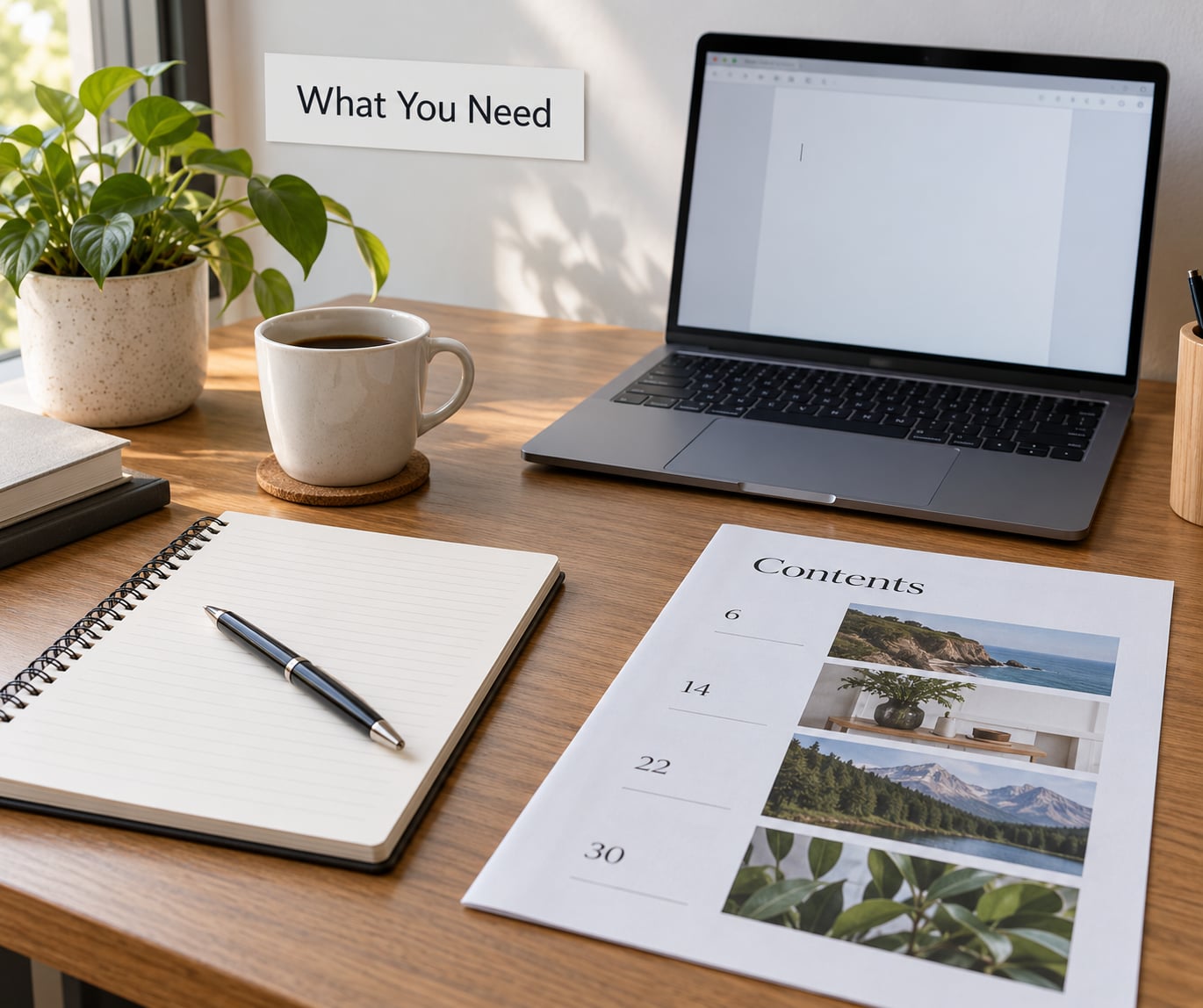
Gather four things before you start, and the reading stops being an open-ended chore with a clear finish line.
- The current submission guidelines. Read these first, not last. They tell you word limits, formatting rules, whether submissions must be exclusive, which genre categories exist, and whether a fee applies.
- The current issue plus two or three back issues. Archives, not just the newest release. A single themed issue tells you very little about a magazine’s regular editorial identity.
- A notebook or a single document with per-magazine sections. Notes scattered across your phone will vanish by the time you write the letter.
- Your own manuscript open in another tab. You cannot judge length, tone, or subject fit while holding a piece in the abstract. Put them side by side.
Two more items earn their place if they exist: the magazine’s newsletter archive, which often explains what an editor is hoping to see, and the contributor masthead, which tells you who is publishing there right now rather than who published there ten years ago.
Step-by-Step: How to Read a Magazine Before Submitting
Run these five steps in order for each magazine on your list. Skipping to step four because you liked a single story is the most common way writers end up sending work to the wrong place.
Start With the Magazine’s Identity and Guidelines
Before reading a single word of fiction, write down the magazine’s identity in one sentence: who publishes here, what they pay attention to, and who they imagine is reading. Most guidelines pages state this directly in a paragraph that writers routinely scroll past.
Note the hard constraints next. Word count ceiling, formatting requirements, simultaneous submission policy, response window, and whether the magazine reads blind or needs your name attached. If the magazine publishes no fiction at all, you have just saved yourself an afternoon.
Then read the editorial board and contributing editor names. If a magazine publishes a mix of veterans and first-time contributors, that mix is your realistic peer group. If every name in the masthead belongs to people with three books out, the competition for an unknown is stiffer than the reading list suggests.
Keene Short, who has spent fourteen years submitting and years editing at JMWW, puts the plain version this way: you cannot know whether a journal is a good fit unless you read what it has published in the near past.
Study the Current Issue and Recent Archive
Compare the current issue against at least two back issues and look for what repeats. Recurring themes, average piece length, first-person versus distant narration, how much dialogue carries a scene, and whether the magazine leans literary or genre.
Read the table of contents twice. Once for names, once for ordering. Where a piece sits in the issue tells you how the editor ranks it. The opener is not an accident, and neither is the last story.
Look for the seams between issues. If the table of contents reads completely differently from the previous two, the magazine has changed direction, new editors have arrived, or a theme is driving the issue. Any of those is worth knowing before you submit.
A practical shortcut for a fifteen-minute triage: read the table of contents, the editor’s note, and two pieces. If nothing in those three minutes gives you a specific reason to keep reading, that is a clear no, and it cost you a coffee break rather than an evening.
Read for Voice, Craft, and Submission Fit
Close reading is where this earns its keep. Take one piece you admire and one that nearly worked for you, and write a short autopsy of each: where it starts, where the tension turns, what the last line does, and how the voice sounds out loud.
For a crime or noir magazine, the signals are more specific. Note whether the mystery is solved or left open, how much violence is described on the page, whether the detective is a working professional or an amateur, whether the ending is bleak, and whether the story earns its bleakness through method or through coincidence.
Then hold your own manuscript next to what you read. This is the actual fit test. Is your piece roughly the length of theirs? Does it end the way theirs end? Is its darkness earned the same way? A magazine that publishes six-thousand-word first-person literary fiction is not a fit for a two-thousand-word procedural told in third person, however much you admire the staff page.
Keep one rule while you read: take notes on their sentences, not on the plot of yours. Copying structure into your own draft is how a submission ends up sounding like a forgery of someone else’s work.
Check the Practical Submission Details
Now go back to the guidelines and confirm the mechanics. Most procedural rejections live here, not in the judging of your prose.
- Simultaneous submissions. Some magazines demand exclusive work for a stated period. Send the same story to two non-exclusive venues on the same day and one of them will find out.
- Reading periods. Many journals only read during a narrow window and ignore everything the rest of the year. Submitting in the wrong month can cost you a full cycle.
- Response times. Guidelines usually state a range. If yours says nothing, assume longer, not shorter.
- File format and anonymity. One editor explained that ignoring the anonymous-read instruction triggers an instant rejection, because it signals the writer never checked. Same logic applies to a stray name in the document properties.
- Withdrawal. If you send a piece elsewhere after submitting, withdraw it properly instead of hoping nobody notices.
Confirm all of it in one sitting. A veteran submitter told forum readers that switching from firing off five to seven pieces a day to working one journal at a time, one a day, after reading the archives and the stated wants, produced more acceptances and fewer rejections than the shotgun approach ever did.
Make a Final Fit Decision and Submit
Decide yes or no before you write a word of the letter. A yes means at least two recent issues contain work you admire and at least one piece close to yours in length and temperament. A no means you read it and found nothing there, and no amount of admiration for the editor’s blog post fixes that.
The dissent is real and worth taking seriously. Plenty of writers skip the read and get published. But the people who do it successfully usually already have a track record with the venue, or they are sending to a large-circulation title where volume matters more than enthusiasm. For a first submission to a small or mid-sized magazine, the read costs you an hour and buys you a much better shot.
Write the cover letter in three sentences. Name something specific you read and why it stayed with you, state in one clause that the piece is unpublished and simultaneous (or exclusive, as required), and stop. Specificity beats enthusiasm every time.
Log it immediately: date sent, story title, word count, reading period, and the date you expect a response. Chase politely, once.
Common Mistakes
Each of these is easy to make and expensive in lost reading time.
- Reading only the current issue. One issue is a snapshot. Three give you an editorial direction, and the difference shows up in your fit decision.
- Working from old guidelines. Guidelines get revised and pages stay online. Check for a date stamp, then check the magazine’s newsletter for an announcement of new rules.
- Submitting with no read at all. The fix is the fifteen-minute triage in step two: table of contents, editor’s note, two pieces, one honest verdict.
- Submitting to a magazine you have never opened. A themed or special issue with an open call is a legitimate exception, since the theme does some of the targeting for you. Check the call carefully and confirm your piece actually fits the theme.
- Imitating one author. Pick two or three pieces, not one, and look for the pattern across them. One writer’s quirks are not a magazine’s style.
- Confusing the free-issue limit with a quality limit. Small circulation and low pay are separate questions from whether the editors publish work you want to write. Judge fit, not prestige.
- Trusting paid lists of venues. Forum threads keep flagging paid lists and services that resell stale contact data. Verify every venue on its own site.
- Forgetting to log the submission. The fix is a single line in a spreadsheet or a tracker: magazine, date, piece, response window. Add it the day you send.
One habit ties all of this together. Keep one spreadsheet row per magazine with columns for guidelines read, issues read, fit verdict, date submitted, and response received. It takes thirty seconds a row and it stops you from double-submitting to a venue that does not allow it.
Frequently Asked Questions
Do you actually have to read an issue before submitting?
Not formally, and plenty of published writers skipped it. But most guidelines ask for it, some magazines enforce it as a courtesy test, and for a first submission to a small or mid-sized journal it costs about an hour. Read at least one recent issue plus the table of contents of two back issues. If nothing there interests you, that is a reason not to submit, not a reason to submit anyway.
How many issues of a literary magazine should I read before submitting?
One issue is enough to rule a magazine out. Three issues is the working minimum for a real fit decision: the current one plus two back issues, so you can separate the magazine’s regular identity from a themed release. Three to five is worthwhile when you are reading for craft rather than targeting, or when you want to write a personal note that references something specific.
Where can I read a literary magazine online for free?
Start with the magazine’s own site: many post the current issue, a free sample PDF, or an archive of recent back issues, and many more post individual pieces as web exclusives. Beyond that, check the magazine’s newsletter archive, which often links to work readers have not seen in print. Directories such as Poets and Writers, New Pages, Duotrope, and Submittable also list venues with submission information and free reading samples.
How do I know if a literary magazine is a right fit for my work?
Put your manuscript next to three pieces from recent issues and compare length, tone, ending, and point of view. Fit is not about whether the magazine is prestigious or pays well. It is whether recent issues contain work you admire and at least one piece shaped roughly like yours. If the only resemblance is the subject matter, that is not enough.
Should I mention the magazine’s editorial style in my cover letter?
Yes, briefly and concretely. One sentence naming a specific piece, author, or recurring theme you noticed shows the editor you read the magazine. Generic praise reads worse than silence. Keep the whole letter to about three sentences and state the piece’s status clearly, rather than explaining why you chose that venue at length.
What does surprise me mean in submission guidelines?
It means the magazine has no fixed house style and asks you not to write toward one. Ploughshares is the most commonly cited example of this approach. If you have read two or three issues and can point to what consistently surprises you in them, you can surprise them too. If you only recognise the name and not the work, treat surprise me as an invitation to read more before submitting.
Conclusion
Start small tonight. Read one current issue of a magazine you have in mind, find two back issues in its archive, and skim the guidelines properly. Write down the five pieces you liked and the one thing that told you the magazine’s direction. That is enough to make a fit decision and enough to write a cover letter nobody has to wonder about.
After that, repeat the routine for each name on your list, and log every submission the day you send it. Reading a magazine before submitting well is a habit, not a one-off chore: the second venue takes forty minutes, and the tenth takes twenty.